Vietnam eVisa Requirements by Country 2026
Complete guide to Vietnam eVisa eligibility, required documents, and country-specific requirements for 2026. Find out if your country qualifies and what you need to apply.

Planning a trip to Vietnam? The Vietnam eVisa is the easiest, fastest way to get your visa — and since 2023, it's been opened to citizens of all countries worldwide. But knowing exactly what you need before you apply saves you time, money, and stress.
This guide covers everything: who qualifies, what documents you need, how much it costs, and what to watch out for.
Who Can Apply for a Vietnam eVisa?
Since August 2023, Vietnam has opened its eVisa program to citizens of all countries and territories — that's 195+ nationalities. Whether you hold a US, UK, Australian, Indian, or any other passport, you can apply online without visiting an embassy.
This was a major change from the previous system, which only allowed around 80 nationalities. Now, virtually everyone can get a Vietnam eVisa from home.
Countries That Previously Needed Embassy Visas
If you previously had to apply at a Vietnamese embassy — including many South Asian, African, and Middle Eastern passport holders — you can now apply entirely online. The process is the same for everyone.
What Documents Do You Need?
Regardless of your nationality, the Vietnam eVisa application requires:
Required Documents
-
Valid passport — Must be valid for at least 6 months beyond your intended entry date. Your passport must have at least one blank page for the entry stamp.
-
Passport-style photo — A recent photo with a white background, face clearly visible, no glasses. JPEG format, under 2MB.
-
Passport bio-data page scan — A clear scan or photo of the page showing your photo, name, date of birth, and passport number.
-
Travel dates — Your planned entry and exit dates. You don't need confirmed flight tickets, but you must provide approximate dates.
-
Entry point — Vietnam has 33 approved entry checkpoints for eVisa holders, including all major international airports (Hanoi, Ho Chi Minh City, Da Nang) and many land and sea borders.
-
Accommodation address — Your first night's hotel or host address in Vietnam.
-
Payment method — Credit or debit card (Visa, Mastercard, JCB, or UnionPay accepted).
Optional but Recommended
- Travel insurance — Not required but strongly recommended, especially for longer stays.
- Onward ticket — Immigration officers may ask to see proof of onward travel.
Vietnam eVisa Types and Validity
Vietnam currently offers two eVisa types:
| Type | Validity | Entries | Best For |
|---|---|---|---|
| Single Entry | 90 days | 1 | First-time visitors, short trips |
| Multiple Entry | 90 days | Unlimited | Frequent travelers, digital nomads |
Both visas allow a maximum stay of 90 days per entry. If you need longer, you'll need to exit and re-enter (with a multiple-entry visa) or apply for a different visa category.
How Much Does a Vietnam eVisa Cost?
The official Vietnamese government eVisa fee is $25 USD for single and $50 USD for multiple entry visas. This is paid directly on the government portal.
However, many travelers use a visa assistance service to avoid the common pitfalls of the government website — such as confusing forms, technical errors, and unclear photo requirements. Assistance services typically charge $45–$70 and handle the entire process for you, including reviewing your documents before submission.
If you need your visa urgently (within 24 hours or even 1 hour), expedited processing is available through assistance services. See our pricing page for current rates.
Country-Specific Notes
US Citizens
U.S. citizens generally need a visa to visit Vietnam, including for tourism. The main exception is a qualifying stay of up to 30 days on Phu Quoc Island only.
UK Citizens
British passport holders can stay in Vietnam up to 45 days under the exemption. If travelers want to stay more than that. They should do Evisa Vietnam 90 days
Australian Citizens
Australian passport holders need Vietnam Visa to visa Vietnam. 4-7 working days
Indian Citizens
Indian passport holders need Vietnam Visa to visa Vietnam. 4-7 working days
Schengen Area Citizens
Citizens of EU/Schengen countries may qualify for visa-free entry for stays up to 45 days (for some nationalities) or 90 days (for others). Check the current bilateral agreements for your specific country, as these change periodically. If your stay exceeds the visa-free period, you'll need an eVisa.
Common Mistakes to Avoid
1. Passport expiry too close Your passport must be valid for at least 6 months after your entry date. Many travelers get rejected because they didn't check this.
2. Wrong photo format The government portal is strict about photo requirements. A selfie or photo with a colored background will be rejected. Use a proper passport photo.
3. Typos in personal details Your name, passport number, and date of birth must exactly match your passport. Even a single character error can cause problems at immigration.
4. Applying too late Standard processing takes 3 business days. Apply at least a week before travel to have buffer time if there are issues.
How to Apply
You have two options:
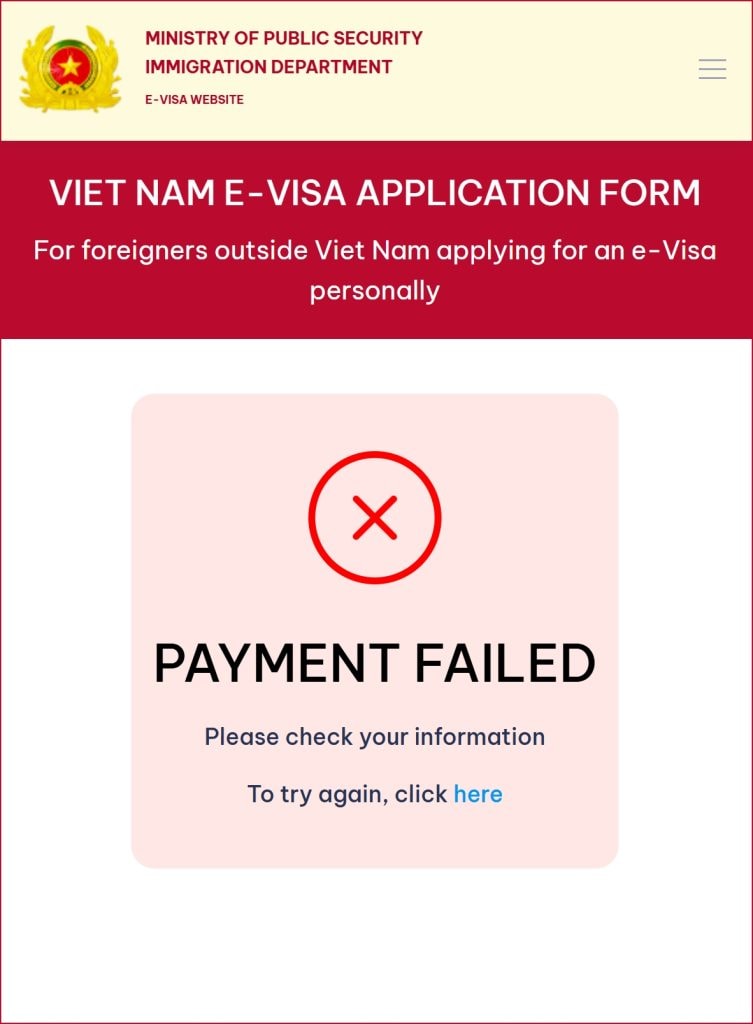
Option 1: Government Portal (evisa.xuatnhapcanh.gov.vn) Apply directly on the official Vietnamese government website. It's free beyond the $25 fee, but the interface can be confusing and technical errors are common.
Option 2: Visa Assistance Service Use a service like Joey Visa Vietnam to handle the application for you. We review your documents, fill out the forms correctly, and follow up if there are any issues. Visit our apply page to get started with code DUONG-WK for priority processing.
Frequently Asked Questions
Can I extend my Vietnam eVisa? Yes, eVisas can be extended once for up to 90 additional days. Extensions must be applied for through the immigration department before your current visa expires.
What if my eVisa application is rejected? Rejections are rare but do happen. Common reasons include incorrect documents, passport validity issues, or security flags. You can reapply with corrected documents.
Can I enter Vietnam multiple times on a single-entry eVisa? No. A single-entry eVisa allows one entry only. If you plan to visit neighboring countries (Laos, Cambodia, Thailand) and return to Vietnam, you need a multiple-entry eVisa.
Is the Vietnam eVisa the same as a visa on arrival? No. The eVisa is approved before you travel and is stamped in your passport at the border. Visa on arrival requires a pre-approval letter and is processed at the airport. The eVisa is generally more convenient. See our full comparison guide for details.
How long does eVisa processing take? Standard processing: 3 business days. Urgent processing (through assistance services): 3 hours to 3 days depending on the option chosen.
Ready to Apply?
Getting your Vietnam eVisa is straightforward when you know what to prepare. Gather your documents, double-check your passport validity, and apply at least a week before your trip.
Need help or want guaranteed fast processing? Visit our apply page and use code DUONG-WK — our team at Joey Visa Vietnam has helped over 155,000 travelers get their visas without stress.
Explore Topics
Written by
Andrew Duong — Joey Visa Vietnam
Content creator and writer sharing insights and stories.